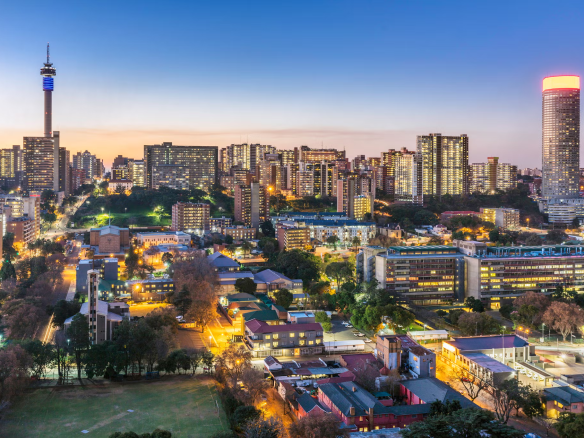
The South African real estate landscape is currently positioned as one of the most compelling “value-play” destinations in the global property market. While domestic transactions form the backbone of the industry, the infusion of international capital is what often elevates a sale from standard to extraordinary. To effectively sell property in South Africa in a modern, hyper-connected world, owners must shift their focus toward an elite global audience that views the Southern Tip of Africa not just as a location, but as a prestigious lifestyle investment.
The Unrivaled Appeal of the South African Lifestyle
South Africa offers a diversity of luxury assets that few countries can match. From the architectural masterpieces clinging to the cliffs of Clifton and Llandudno in the Western Cape to the expansive, high-security wildlife estates in the Greater Kruger area, the inventory is world-class. International investors are particularly drawn to:
-
The Cape Winelands: Offering a lifestyle comparable to the French Riviera or Tuscany but with a significantly higher level of exclusivity and value.
-
The Garden Route: A magnet for European retirees and nature lovers seeking pristine coastlines and temperate climates.
-
Signature Golf Estates: South Africa boasts some of the world’s highest-ranked golf courses, surrounded by secure, luxury residential developments that appeal to high-net-worth individuals.
The “Currency Catalyst”: Why Now is the Time to Sell
The primary driver for the current surge in international interest is the exchange rate between the South African Rand (ZAR) and major “hard” currencies like the British Pound, US Dollar, and Euro. To a local seller, the price might seem substantial; to an overseas buyer, it represents an almost unprecedented discount for luxury.
When you sell property in South Africa to an international buyer, you are marketing to someone whose purchasing power has, in many cases, doubled over the last decade. This currency advantage allows international buyers to acquire sprawling estates or triple-story penthouses for the price of a modest two-bedroom apartment in London or New York. By advertising overseas, you ensure that your property is positioned to capitalize on this financial motivation.
The Necessity of Global Exposure
For high-end properties, the domestic buyer pool in South Africa can sometimes be limited by local economic pressures or high interest rates. International advertising acts as a critical safeguard against these local fluctuations. It allows the seller to bypass domestic stagnation and tap into a market that is:
-
Liquid: Foreign buyers often arrive with cash or offshore financing, leading to faster closing times.
-
Motivated: Overseas investors are often seeking a “safe haven” for their capital in tangible assets like land and luxury bricks-and-mortar.
-
Diversified: Global buyers view South Africa as an essential component of a diversified international property portfolio.
Establishing a “Global Standard” Presentation
To attract an investor from the other side of the world, your property must be presented with a level of sophistication that meets global standards. In the digital-first era of real estate, the first “showing” happens on a screen in London, Berlin, or Dubai.
A successful international campaign to sell property in South Africa must include:
-
Cinematic Drone Videography: Capturing the dramatic topography of the South African landscape is essential for selling the “dream”.
-
4K Virtual 3D Tours: Allowing a buyer in another hemisphere to walk through the home virtually builds the necessary trust to move toward an offer.
-
Professional Staging and Photography: Ensuring the aesthetic appeals to a broad, cosmopolitan audience.
Navigating the “Semat” and Legal Trust
One of the perceived hurdles for foreign buyers is the complexity of South African exchange controls and property laws. To sell property in South Africa successfully, your marketing must be supported by clear, transparent information regarding the legal process.
Highlighting the security of the South African Deeds Office—which is internationally recognized for its accuracy and reliability—is a major selling point. Furthermore, providing a clear roadmap for how funds can be legally repatriated through the South African Reserve Bank (SARB) helps alleviate the concerns of foreign investors and streamlines the transaction.
Reaching the “Digital Nomad” and “Semigrant”
The rise of remote work has created a new class of buyer: the Digital Nomad. South Africa, particularly Cape Town, has become a top-tier destination for this group due to its favorable time zone (matching Europe), English-speaking environment, and high quality of life. This demographic is looking for modern, secure, “plug-and-play” properties. By utilizing global SEO and international portals, you ensure your property is visible to this tech-savvy, mobile, and affluent demographic.
Conclusion: Think Global to Win Local
The decision to sell property in South Africa should not be limited by geographic boundaries. We live in an era where capital is mobile, and the most motivated buyer for your home may currently be sitting in an office in the Northern Hemisphere. By embracing international advertising and a global marketing strategy, you transform your property from a local listing into an elite international opportunity.
Don’t leave your sale to chance. Visit ESales International to learn how to sell property in South Africa through our premier global marketing network and achieve the premium price your property deserves.