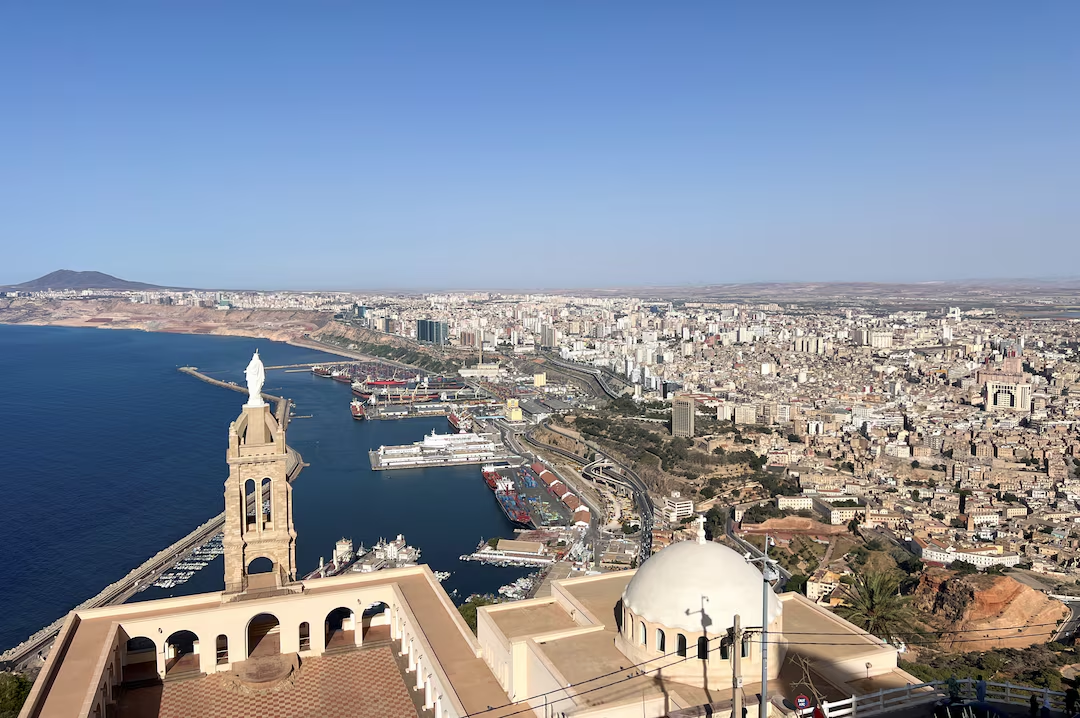
Algeria’s property market for foreign owners is governed by a strict civil law framework. While foreigners are legally permitted to own residential property, the process for selling and repatriating funds is highly procedural and requires professional legal oversight to ensure compliance with Algerian law when Selling Property in Algeria as a Non-Resident.
1. The Legal and Regulatory Framework
In Algeria, property rights are only fully protected and transferable once they are formalized through an authenticated process.
-
The “Notary-First” Principle: Every real estate sale must be formalized by a certified public notary (notaire). The notary acts as the legal gatekeeper, verifying the identity of all parties, ensuring the property title is clean, and drafting the acte authentique (authenticated deed).
-
Property Title (Livret Foncier): Your property must be registered in the national land book (livret foncier). If your property is not yet registered, this is a significant hurdle that must be resolved before a sale can proceed, as unregistered transactions have no legal effect against third parties.
-
Remote Transactions: You do not necessarily need to be in Algeria for the entire process. You can grant a Power of Attorney (PoA) to a representative, though it must be drafted or legalized in accordance with Algerian notarial requirements.
2. Documentation Requirements
To finalize a sale, you will need to assemble a formal file for your notary:
-
Proof of Ownership: Your original livret foncier (land book) or registered title deed.
-
Identification: A valid passport.
-
Tax Clearance: You will need an attestation de situation fiscale (tax clearance certificate) to prove that all property-related taxes have been paid.
-
Clearance Certificates: Documents confirming that there are no outstanding utility debts or liens on the property.
-
Marital Status: If applicable, legal proof of marital status may be required to clear title rights.
3. Financial Considerations and Repatriation
Repatriating proceeds is one of the most complex aspects for non-residents, as it is governed by strict foreign exchange controls.
-
Bank Documentation: Funds must move through formal banking channels. You must be able to document the original purchase and the subsequent sale to satisfy Algerian anti-money laundering (AML) and banking regulations.
-
Repatriation Process: While the law recognizes the right of foreign investors to transfer proceeds from the sale of their assets, it is not an automatic or immediate process. You will generally need:
-
The finalized, notarized sale deed.
-
Evidence of tax settlement.
-
Approval/clearance from the Banque d’Algérie (via your local domiciliary bank).
-
-
Taxation: As a non-resident, you are subject to tax on Algerian-source income. Capital gains taxes may apply, and failure to settle these obligations will effectively block the repatriation of your funds.
4. Preparing for Sale: A Checklist
-
Verify Your Title: Ensure your property is registered in the livret foncier. If it is not, engage a notary immediately to begin the regularization process.
-
Appoint a Notary: Work with a notary experienced in handling foreign-owned assets, as they will be your primary liaison with the land registry and tax authorities.
-
Clear Tax & Utility Debts: Obtain your tax clearance certificate early to avoid delays during the closing phase.
-
Coordinate with a Bank: Discuss the sale with your local Algerian bank to understand the specific documentation they require to authorize an international transfer once the sale is complete.
-
Seek Specialized Legal Counsel: Given the complexity of Algerian land law and currency regulations, retaining a legal firm that specializes in foreign investment can help prevent administrative bottlenecks.
Disclaimer: This guide is for informational purposes only. Real estate and foreign exchange regulations in Algeria are complex and strictly enforced. Always consult with a qualified local notary or legal professional regarding your specific transaction.
Are you currently in the process of gathering your property’s legal documentation, or are you looking for guidance on finding a reputable notary or legal expert in Algeria to assist you?