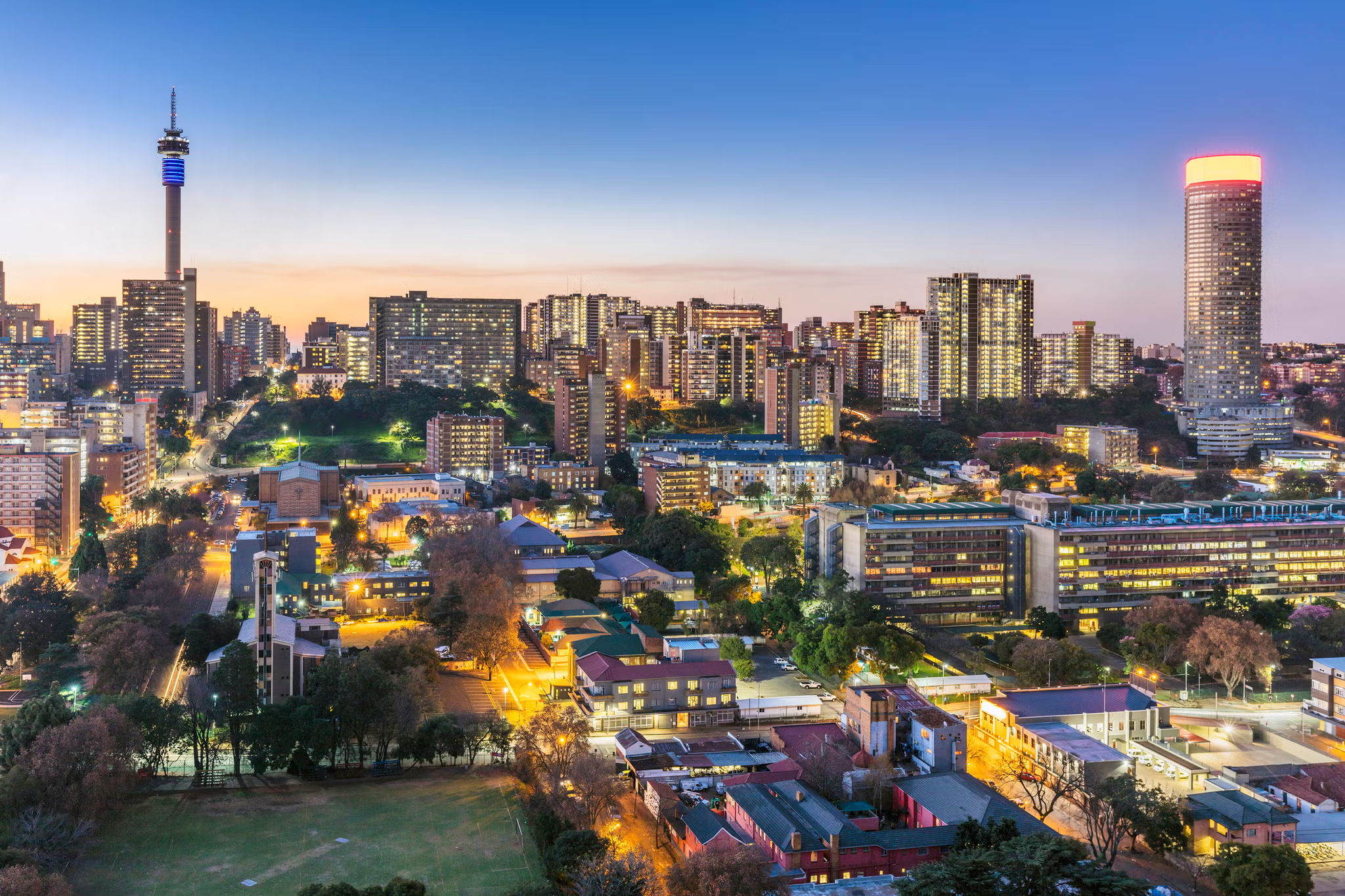
The South African residential property market is undergoing a structural transformation as it transitions towards the end of 2026. Following an extended period of macroeconomic adjustments, interest rate cycles, and changing post-pandemic lifestyle preferences, the housing sector is moving toward a more sustainable, fundamentally driven expansion phase. For property investors, financial institutions, and homebuyers, understanding the evolving dynamics of price growth, mortgage access, supply bottlenecks, and regional demand is essential for navigating the current landscape.
Economic Fundamentals and Price Trends
South Africa’s housing sector has demonstrated renewed resilience, supported by stabilizing economic indicators and a broader post-tightening recovery. With national headline inflation moderating—dipping near 3.2% in recent periods—real house price growth turned positive for the first time in several years.
Key macroeconomic drivers shaping the current market include:
-
Measured Capital Appreciation: Nominal house price growth has stabilized near mid-single digits. Rather than a speculative or credit-driven surge, price formation is closely aligned with underlying economic fundamentals and improving household balance sheets.
-
Interest Rate Normalization: Progressive rate adjustments by the South African Reserve Bank (SARB) have brought the prime lending rate down to around 10.5%. While still elevated compared to historical lows, the easing monetary stance has begun trimming monthly mortgage payments and improving baseline buyer affordability.
-
Affordability Pressures: Elevated municipal utility tariffs, property rates, and living costs continue to constrain lower- and middle-income buyers. Consequently, demand remains strongest in lower-to-mid price brackets and strategic urban growth corridors.
Key Demand Drivers and Emerging Buyer Trends
Demographic shifts, changing work models, and credit support mechanisms are actively reshaping buyer behavior across major metropolitan regions.
1. The Rise of “Rent-Vesting” Among Younger Demographics
While the average age of a first-time homebuyer in South Africa hovers around mid-30s, younger buyers (particularly Gen Z and young millennials) are increasingly adopting alternative paths to property ownership. Driven by high entry barriers in prime metropolitan nodes, many choose to “rent-vest”—purchasing buy-to-let units in affordable growth areas to build equity while renting residences that match their immediate lifestyle needs in urban centers.
2. Corporate Return-to-Office and Sectional Title Surge
The tapering off of fully remote work policies has spurred a resurgence in demand for sectional title properties (apartments and townhouses). Buyers are prioritizing proximity to business districts, security, and low maintenance over expansive suburban space. Sectional title sales volumes and equity growth have shown notable outperformance, supported by lock-up-and-go convenience and off-plan purchasing options.
3. Government Subsidies and First-Time Buyer Support
Targeted policy interventions, particularly the First-Time Home Ownership Subsidy Program (formerly FLISP), continue to narrow deposit gaps for entry-level buyers. Coupled with competitive lending practices from major mortgage originators and banks—such as elevated loan-to-value (LTV) ratios—affordable housing below R1 million remains an active segment of the formal market.
Regional Divergence and the “Semigration” Effect
The national housing market exhibits sharp geographical contrasts, with regional performance dictated by local municipal governance, economic activity, and internal migration patterns.
                 SOUTH AFRICAN REGIONAL HOUSING MARKET DYNAMICS
 ┌────────────────────────────────────────────────────────────────────────┐
 │                                                                        │
 │   WESTERN CAPE & COASTAL              GAUTENG METROS                   │
 │   • Strong "Semigration" Inflows      • High Gross Rental Yields       │
 │   • Premium Price Appreciation        • Flat Nominal Capital Growth    │
 │   • Supply-Constrained Nodes          • Sectional Title Demand Focus   │
 │                                                                        │
 └────────────────────────────────────────────────────────────────────────┘
-
Western Cape & Coastal Belts: The Western Cape, led by Cape Town and surrounding coastal towns, continues to outpace the national average in price appreciation. Driven by ongoing internal “semigration” from inland provinces, robust infrastructure, and high lifestyle appeal, demand consistently outstrips available land supply.
-
Gauteng (Johannesburg & Pretoria): While nominal price growth in Gauteng has remained subdued, the province offers some of the highest gross rental yields in the country—averaging over 10% to 13% for sectional title apartments in select nodes. Investors favor Gauteng for income-generating portfolios rather than short-term capital gains.
-
Secondary Coastal & Inland Hubs: Regions across KwaZulu-Natal and inland nodes such as Bloemfontein are experiencing increased interest due to lower entry prices, developing logistics corridors, and expanding regional commercial hubs.
Supply Bottlenecks and Rental Market Dynamics
On the supply side, the residential sector faces ongoing structural constraints that help establish a firm floor under property values:
-
Construction Costs & Municipal Delays: Elevated building material costs, infrastructure backlogs, and municipal approval delays have resulted in reduced residential building plan submissions and completions. Developers are largely completing existing pipelines rather than initiating speculative large-scale builds.
-
Tightening Rental Market: Because supply bottlenecks limit new housing stock, the rental market has tightened considerably. Landlords are achieving healthier rental escalations, supported by steady tenant demand from households delaying property purchases until interest rates ease further.
Strategic Outlook for Investors and Buyers
Moving deeper into 2026, the South African housing market presents distinct opportunities depending on asset class and location:
-
Focus on Cash Flow in Inland Metros: Investors seeking immediate income yield should look toward well-managed sectional title complexes in major economic hubs like Johannesburg and Pretoria.
-
Target Long-Term Equity in Coastal Corridors: Buyers focused on long-term capital preservation and steady real appreciation continue to find value in Western Cape coastal developments, despite higher entry costs.
-
Leverage Green and Off-Grid Amenities: Properties equipped with sustainable features—such as solar backup systems, energy-efficient climate control, and private water solutions—command premium resale values and experience lower tenant vacancy rates.
The South African residential real estate market has shifted from post-tightening stabilization toward a phase of measured growth. With disciplined entry, attention to local micro-markets, and a clear understanding of financing structures, both end-users and property investors are well-positioned to capitalize on this ongoing market cycle.